Opals: origins, varieties and characteristics
Opals are among the most fascinating stones in the world. Composed of hydrated silica, they form naturally over time in cracks of sedimentary or volcanic rocks. Depending on their structure, origin and background colour, they offer a wide variety of aspects, ranging from crystal clearness to the most intense colour sets.
Appreciated for their unique beauty, opals are offered in several natural varieties, each having its own character.
Black opal
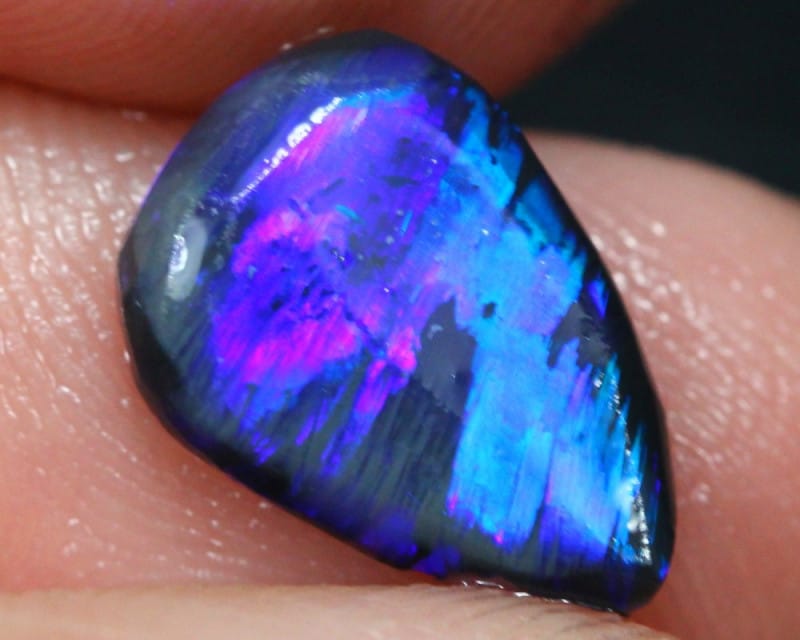
Black opal is the rarest and most precious opal. Its dark background color particularly highlights the sets of colors, also called « Lights », which may reveal blue, green, red or multicolored shrapnel.
It comes mainly from Lightning Ridgein Australia, a region known worldwide for the exceptional quality of these black opals.
White opal
White opal is the most common variety. It has a clear background colour, white or milky, which reveals subtle coloured reflections.
It is mainly extracted from Coober Pedy, in Australia, one of the most famous opal deposits in the world. Its bright and soft appearance makes it a very appreciated stone in jewellery.
Crystal opal
Crystal opal is distinguished by its transparency or translucency. It can present a beautiful set of colours while maintaining a great visual clarity.
This variety is also extracted from Coober Pedy, as well as in other opal regions of Australia. Its radiance and purity make it a particularly sought after stone.
L-opale bolter
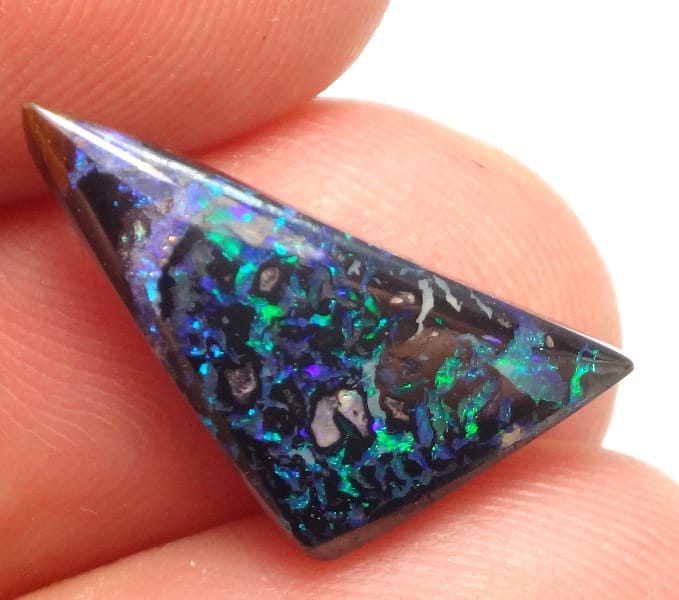
The opal bolter is a natural opal formed in the mother rock. It occurs in the form of fine doopal veins embedded in a ferruginous matrix, giving it a crude, original and often spectacular appearance.
It comes mainly from the QueenslandAustralia. Each stone is unique, with free and irregular motifs highly appreciated by collectors and lovers of natural gems.
Koroit Matrix
The Koroit Matrix is a particularly famous d It is composed of a natural network of doopal veins through a ferroginous rock.
It also comes from the Queenslandin Australia, specifically the Koroit region. Its unique aesthetic makes it a highly sought after opal for its artistic and mineral character.
Andamooka
The opal of Andamooka comes from the locality ofAndamookaAustralia. Some stones in this area are known for being treated to darken their shade and strengthen their appearance.
Naturally more porous than other varieties, the opal of Andamooka is generally considered to be more fragile. However, it remains an interesting variety in the universe of Australian opals.
Composite opal
Composite opal is an opal assembled by man. It is designed from several elements to highlight the color of natural opal.
The main distinctions are:
- on doublet, consisting of a thin slice of opal glued on a dark background ;
- on triplet, composed of a thin slice of opal covered with transparent protection, often in quartz or glass.
These opals offer a beautiful visual effect, but they do not have the same value as a full natural opal.
Fire opal of Mexico
The Mexican fire opal is famous for its warm hues, ranging from yellow to intense red, passing through orange. Unlike some precious opals, it does not always present a play of colors, but seduces by its transparency and natural vivacity.
However, some Mexican fire opals can show very attractive internal reflections. Their luminous beauty makes them particularly appreciated stones in jewellery.
Peru opal
Peru opal is a fine stone appreciated for its soft shades, often blue, green or turquoise. Unlike Australia's precious opals, it usually does not have a set of colours.
It is extracted in the Andes and seduces by its soothing appearance, natural color and discreet elegance.
Welo of Ethiopia
Welo is from Ethiopia in the Welo region. Discovered more recently than the great Australian opals, it is now highly appreciated for its bright colours and exceptional brightness.
Depending on the angle of view and light, it can reveal bright and changing color sets. Its spectacular appearance makes it a highly sought after stone in the opal market.
The Welo opal is a precious stone recently discovered in Ethiopia, in the Welo region, known for its vibrant and shimmering hues that change according to the angle of view and lighting conditions.
Why are opals so unique?
Every opal is different. Its natural formation, water content, internal structure and geographical origin directly influence its appearance. It is this diversity that makes opals so fascinating, both for collectors and for those passionate about gems and jewellery.
From the black opals of Lightning Ridge to the bullish opals of Queensland, to the fire opals of Mexico or the Welo opals of Ethiopia, each variety has its own identity and incomparable charm.
Discover our selection of natural opals and find the stone that suits you.

