
How do I recognize a real opal ? (Full Guide)
Introduction
Recognizing a true opal is essential before any purchase, especially given the many imitations available on the market. Between natural opals, synthetic opals and assemblages like doublets or triplets, it is easy to be mistaken.
In this comprehensive guide, you will learn how to recognize an authentic opal, identify quality signs and avoid the most common traps.
What is a natural opal ?
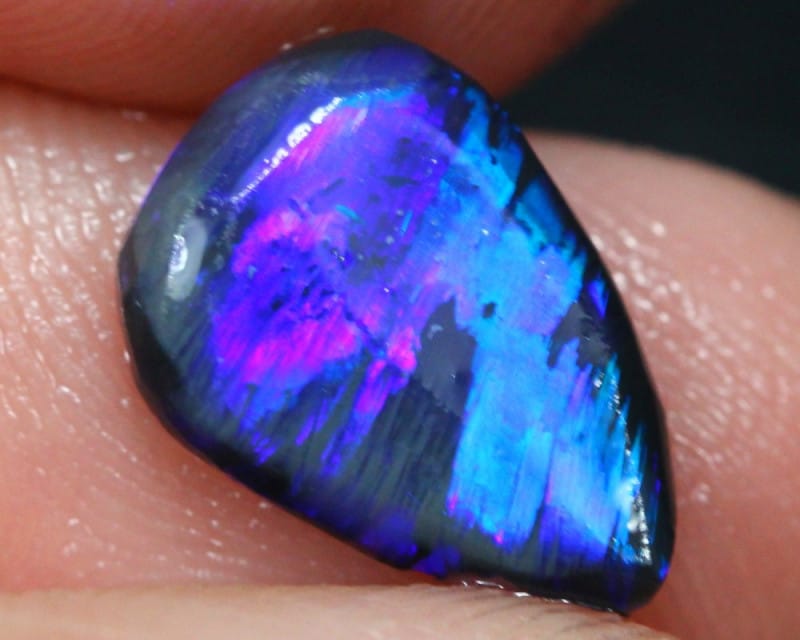
A natural opal is a precious stone composed of hydrated silica. It is distinguished by a unique optical phenomenon called play-of-color.
This phenomenon creates multicolor reflections when the light crosses the stone, giving this magical and unique effect.
The characteristics of a real opal
An authentic opal presents several key elements:
Changing colors according to the angle
Irregular and Unique Patterns
An impression of depth (effect 3D)
Uniform natural structure
Variable transparency (opaque to translucent)
Different types of natural opals
There are several varieties of opals, each with its specificities.
Black Opal
Black opal is the rarest and most precious. It comes mainly from Australia, notably from Lightning Ridge.
It is distinguished by a dark background that intensifies the colors and increases its value.
White opal
White opal has a clear background. It is often extracted from Coober Pedy.
Its colours are generally softer but remain elegant.
Boulder Opal
L Boulder 0pal is naturally mixed with rock. It presents Patterns unique and very appreciated by collectors.
Fire opal
Fire opal is recognizable by its orange to red colour. Unlike other opals, it does not always present a set of colors.
False Opals and Imitations
Not all opals available on the market are natural. Some are manufactured or assembled.
Synthetic opals
Synthetic opals are created in the laboratory.
They often have too regular and repetitive patterns, with artificial visual effect.
Doublet and triplet
These stones are composed of several layers:
Doublet: thin layer of opal glued to a suppo
Triplet: addition of a protective glass layer
They are less precious than a solid natural opal.
Plastic or glass imitations
Imitations are generally easy to recognize:
Lack of depth
Colours too bright or artificial
Uniform aspect
7 tips to recognize a real opal
Here are the most effective methods to identify a natural opal.
1. Observe reasons
A true opal has random and irregular patterns.
Repeating patterns often indicate imitation.
2. Check depth
A natural opal gives an impression of depth, almost three dimensions.
A false opal seems flat.
3. Examine the back of the stone
The back can reveal the nature of the stone:
Natural: irregular or raw
Triplet : uniform black
4. Watching diapers
If several layers are visible on the slice, it is probably an assembly.
5. Test with light
A real opal changes color according to angle and light.
6. Price Analysis
A very colorful opal sold at a very low price must arouse doubts.
7. Request a certificate
A certificate of authenticity guarantees the quality and origin of the stone.
Where to buy a real opal?
To buy an authentic opal safely:
Focus on specialized vendors
Check customer reviews
Ask for real photos or videos
Require a certificate of authenticity
Buying from a specialist shop helps avoid bad surprises and ensures the quality of the stone.
Expert tip
A natural opal is never perfect.
Small irregularities or inclusions are often a sign of authenticity. A stone too perfect can be suspicious.
FAQ – Recognize a true opal
Can an opal be transparent?
Yes, some opals are translucent, including fire opals.
Can an opal lose its colors?
Yes, if it dehydrates or is poorly preserved.
Does a synthetic opal have value?
It has aesthetic value, but remains less valuable than a natural opal.
Conclusion
Recognizing a true opal becomes simple when one knows the right criteria.
By observing the patterns, depth and structure of the stone, you can easily differentiate a natural opal from an imitation.
For a confident purchase, always focus on quality, transparency and authenticity certificates.
Before buying an opal: our complete guides to avoid errors.
Before any purchase, it is essential to understand the basics. Consult our full opal guide to learn to recognize different varieties.
If you want to go further, discover also how to polish an opal easily after purchase.


