Guide for beginners: understanding, recognizing and buying an opal
Introduction
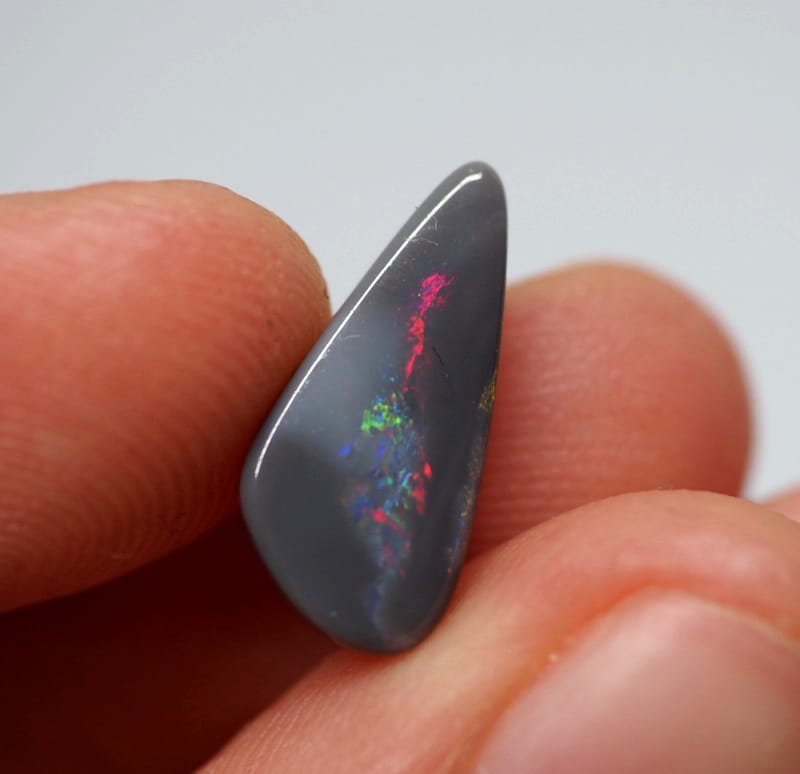
The opal is one of the most fascinating gemstones in the world. Unlike diamonds or rubies, it is distinguished by a unique phenomenon: set of colors, called play-of-color in English.
This stone can display blue, green, red, orange or purple reflections that appear to change when the light moves.
However, for a beginner, the opal may seem complex. There are several varieties, different origins and specific quality criteria.
In this guide you will discover:
- what an opal really is
- different varieties of opals
- how to recognize a natural opal
- criteria which determine the value of an opal
- tips to buy your first opal
What is an opal?
It is a stone composed mainly of hydrated silica.
Unlike most precious stones, the opal is not crystalline. Its internal structure is made up of tiny silica spheres that difract light.
This phenomenon produces the beautiful multicolored reflections visible in some opals.
Composition of the opal
- Chemical composition : SiO2·nH2O
- Water content: approximately 3 to 21%
- Hardness: 5.5 to 6.5 on the Mohs scale
Therefore, it is slightly more fragile than stones such as diamond, rubies or sapphire.
The main varieties of opals
Not all opals look alike. Some varieties are much more rare and sought after than others.
Black opal
Black opal is considered the rarest and most valuable variety.
Its dark background makes it possible to highlight very intense colors. The most beautiful black opals usually come from Lightning Ridge in Australia.
Characteristics:
- dark or black background
- very bright colors
- high value on the gem market
White opal
White opal has a light or milky background.
It is more common but remains very appreciated for its colorful reflections.
The majority of white opals come from Coober Pedy in Australia, one of the largest doopal deposits in the world.
Characteristics:
- white or cream background
- colors often softer
- prices generally more accessible
L Boulder 0pal
L Boulder 0pal forms in a rock called Ironstone.
When cut, the stone often retains part of this natural matrix. This gives unique and highly appreciated patterns of collectors.
Characteristics:
- natural rock
- excellent strength
- very original patterns
The main regions producing opals
Australia produces about 90% of precious opals in the world.
The main deposits are located in:
- Lightning Ridge
- Coober Pedy (white opals)
- Queensland (Boulder Opals)
However, other countries also produce opals:
- Ethiopia
- Mexico
- Brazil
- United States
Each region gives opals with different characteristics.
How do I recognize a real opal?
When buying an opal, it is important to check that it is natural.
Here are some things to observe.
The Color Set
A true precious opal presents a visible colour play when the stone is inclined.
The colors seem to move inside the stone.
Natural Patterns
Each opal has unique patterns called patterns.
The most well-known reasons are:
- Pinfire
- flash
- big flash
- Harlequin
Some rare patterns can significantly increase the value of the stone.
Magnifying observation
Some synthetic opals show too regular structures or repetitive patterns.
A natural opal usually has more irregular structures.
How to assess the quality of an opal?
Several criteria determine the value of an opal.
The shine
The more intense and bright the colors, the more precious the opal.
Visible colors
The rarest colors are:
- red
- orange
- purple
Opals that present these colours often have a higher value.
The bottom of the stone
Opals with a dark background often have more contrasting and spectacular colours.
The motive
Some patterns such as Harlequin are very rare and very sought after.
How to maintain an opal?
The opal requires some precautions.
Here are some simple tips:
- avoid shocks
- avoid very high temperatures
- avoid chemicals
To clean an opal, simply use:
- Of lukewarm water
- a soft cloth
Tips for buying your first opal
If you start, here are some recommendations.
- Buy from a specialist seller
- Request a certificate of authenticity
- Observe the stone from several angles
- Compare multiple opals before choosing
The White Opals and Boulder Opals are often a great choice to start a collection.
Conclusion
The opal is a unique and fascinating gemstone. Thanks to its incredible set of colors, each opal is different.
Understanding the basics of this gem will help you recognize a natural opal and choose a quality stone.
Whether for a jewel or for a collection, the opal remains one of the most magical stones in the mineral world.
FAQ on opal
Is the opal a precious stone?
Yes. The precious opal is considered a gem of great value when it presents a set of colors.
Why do some opals not have color?
Some opals are called common opals. They do not have a set of colours.
Is the opal fragile?
It is more tender than some precious stones, but remains durable if well maintained.


