
Why is Australian opal becoming increasingly rare?
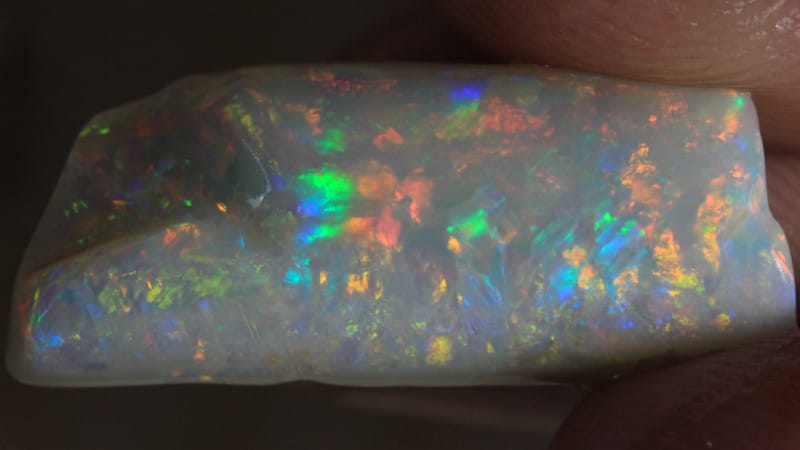
Australian opal is one of the most fascinating gemstones in the world. Its unique sets of colours – red, green, blue or multicoloured – give the impression that a real rainbow is trapped in the stone.
Today, a reality is needed: rare Australian opal is becoming increasingly difficult to find.
Why is this scarcity? Is it a temporary phenomenon or a sustainable trend?
In this article, discover the main reasons why Australian natural opals become rarer and more sought after worldwide.
Why is Australian opal becoming rare?
Several factors explain the gradual scarcity of Australian opals:
– old deposits run out
– extraction costs increase
– climate conditions become more difficult
– Independent minors disappear
– global demand remains high
This combination makes beautiful natural opals harder to find each year.
Large Australian deposits have been mined for over 100 years
Australia's major mining areas such as Lightning Ridge, Coober Pedy, White Cliffs or Andamooka have been in operation for over a century.
The most accessible areas have already been extensively explored. Today, minors must:
– dig deeper
– explore more difficult terrain
– use more machines
– invest more money
– work longer without discovery guarantee
Unlike other mineral resources, the opal often appears in irregular pockets.
A minor can work several weeks without finding a quality stone
Precious opals are naturally rare
Not all opals have the same value.
Much of the opals extracted are said to be « municipalities », without any real set of colors. The precious opals remain much rarer.
For an opal to have a high value, several criteria must be met:
– an intense set of colours
– a beautiful brightness
– good stability
– few cracks
– an interesting shape for the size
– an attractive background color.
Black opals with red and green colours are particularly rare and sought after.
This natural rarity partly explains the gradual increase in prices.
Operating costs increase sharply
Extraction of an Australian opal requires significant investment.
Minors must finance:
– Mining permits
– machinery
– fuel
– maintenance
– insurance
– transport
– water
– repairs
Before you even discover a stone, thousands of euros can be invested.
As the opal remains unpredictable, some miners spend a lot of money without finding profitable stone.
Water shortage becomes a major problem
The regions producing opals are mainly located in arid or semi-desert areas.
Water remains essential for:
– Clean stones
– treat debris
– cool some equipment
– reduce dust
When water becomes more difficult to obtain or more expensive, mining activity slows down sharply.
This naturally reduces the number of opals available on the market.
Australian climate makes work more difficult
Temperatures are increasing in many Australian mining areas.
Minors must now face
– extremely hot days
– greater fatigue
– health risks
– reduced work periods
– higher water consumption
In some areas, heat can make operation almost impossible for several weeks.
According to CSIRO and Bureau of Meteorology Climate Report 2024, Australia's climate continues to change, with more heat and more dangerous conditions in several regions.
Fires disrupt mining areas
Australian fires regularly impact mining areas.
Even when a mine is not directly affected, the consequences can be significant:
– road closure
– evacuations
– logistical delays
– power cuts
– increased insurance costs
These disturbances slow down extraction and limit the production of opals.
Fuel price increases opal cost
An opal mine is highly fuel dependent.
Diesel and gasoline are necessary to:
– excavators
– generators
– trucks
– Off-road vehicles
– the transport of equipment
As mines are often located in isolated areas, each increase in fuel significantly increases production costs.
Independent minors are gradually disappearing
The exploitation of Australian opal is historically based on independent miners.
But this profession remains particularly difficult:
– isolation
– physical risks
– long periods without income
– permanent uncertainty
Today, many minors retire and few young people resume this activity.
Fewer miners naturally mean fewer discoveries.
The opal is difficult to mechanize
Unlike some mineral resources, opal remains fragile.
Mishandling can break a Gemstone.
The extraction therefore requires:
– experience
– patience
– from observation
– lots of precision
This difficulty limits the speed of operation and reduces the volumes produced.
World demand remains very strong
As extraction becomes more difficult, global demand remains high.
Australian opals attract:
– collectors
– jewelers
– investors
– natural stone enthusiasts
Untreated natural stones with beautiful sets of colours are particularly sought after.
This combination of low supply and high demand leads to a gradual rise in prices.
Quality opals become collection pieces
Today, some Australian opals are considered to be genuine collection pieces.
The most sought after are:
– the Black Opals
– multicolored opals
– stones with dominant red
– large Natural Opals
– Opals with a known provenance
A beautiful opal becomes difficult to replace, which increases its value over time.
Conclusion: Why is Australian opal becoming increasingly valuable?
Rare Australian opal becomes difficult to find for several reasons:
– old deposits run out
– new discoveries are rarer
– costs increase
– climate complicates exploitation
– Independent minors disappear
At the same time, world demand continues to rise.
Result: the beautiful ones Natural Opals become more and more precious.
Buying an opal today is not just buying a decorative stone. It is acquiring a rare fragment of the Earth, formed millions of years ago and becoming increasingly difficult to find.
FAQ: Everything about the rarity of Australian opals
Why are Australian opals rare?
Australian opals are rare because large historical deposits have been exploited for more than 100 years and the Precious Opals represent a small proportion of the stones extracted.
What is the rarest Australian opal?
The Black Opals with red and green colours from Lightning Ridge are among the rarest and most sought after opals in the world.
Why is the price of opals rising?
The price of opals is rising due to low deposits, rising operating costs and strong global demand.
Are Australian opals a good investment?
Some Natural Opals high quality can gain value over time, including rare opals with a beautiful provenance and a strong play of colour.
What a difference between a Common Opal and one Precious Opal ?
One Precious Opal has a play of colour visible while Common Opal usually has no significant coloured effects.


