
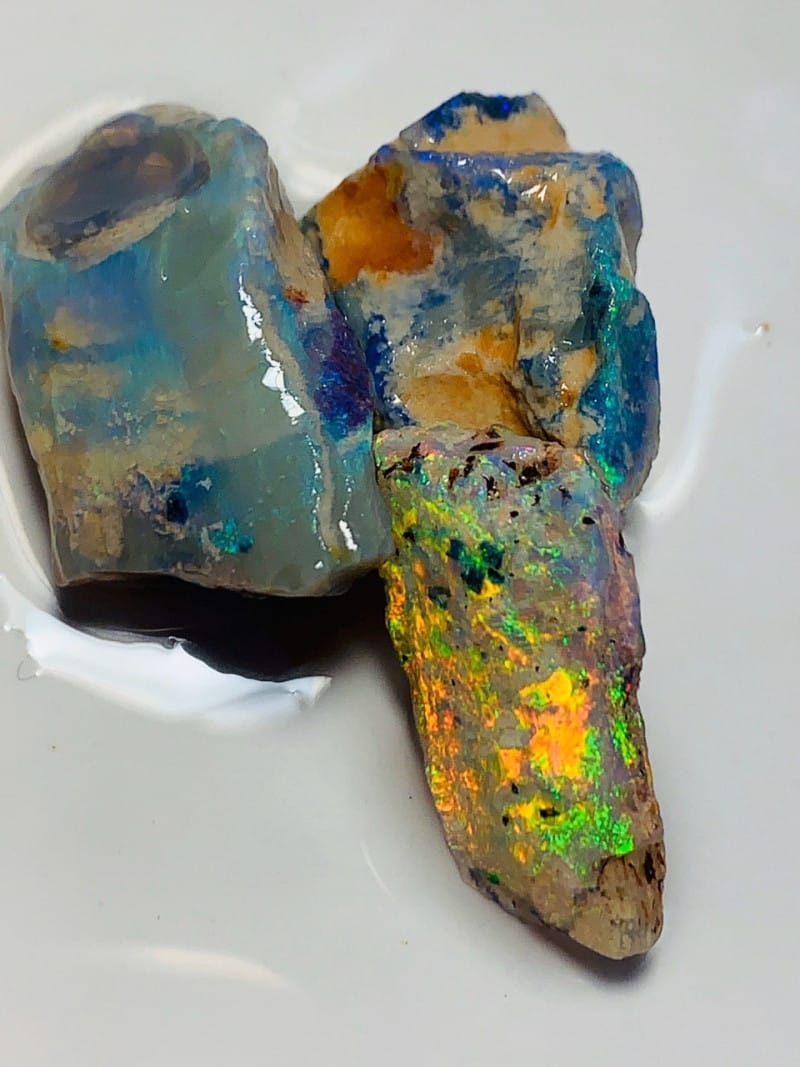
Nobby opal or seam opal: these two expressions refer to the main natural forms in which Rough Opal appears to Lightning Ridge, in Australia. A nobby presents itself as a Nodule isolated and generally rounded. A seam opal instead forms a vein or a layer in the rock.
This distinction does not correspond to treatment or quality. It first describes the shape occupied by the opal in the field. Yet it influences its raw appearance, the visibility of the colour and the way to prepare the stone before polishing.
After explaining the difference between a nobby and an opal rub, Let's find out how to recognize an opal nobby and a seam opal. We will also see what these two forms change for the purchase and the work of the lapidary.
What is an opal nobby?
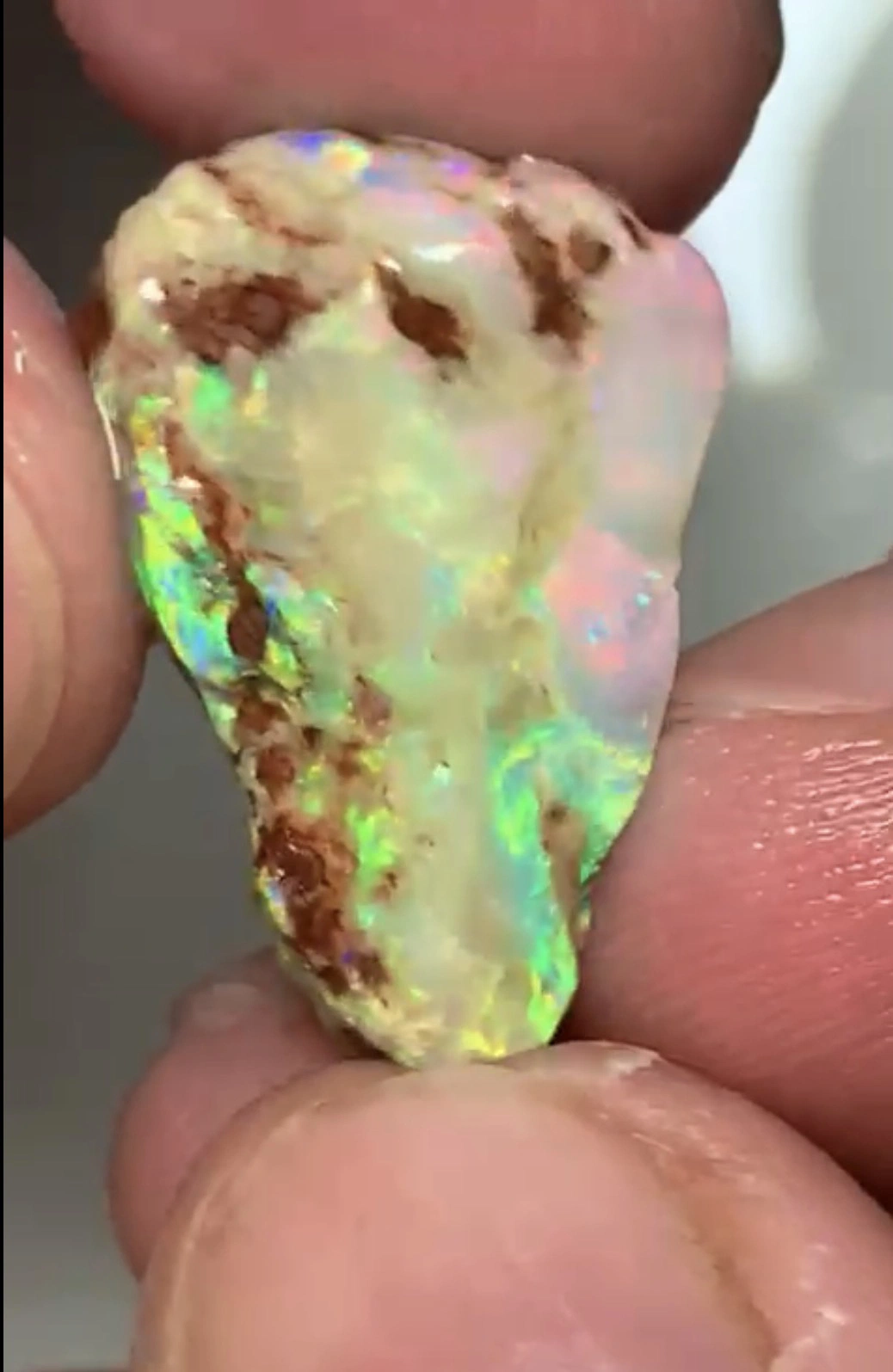
One nobby opal is a Rough Opal which has developed in the form of Nodule. Its silhouette can be rounded, oval or irregular. Some nobbies are small, while others are significantly larger.
The outer surface may be covered with clay rock or potch, i.e. d Common Opal without play of colour. Therefore, the precious part sometimes remains entirely hidden. The minor or the lapidary must then open or gradually grind the Nodule to understand its structure.
This uncertainty explains the attractiveness of nobbies. An ordinary envelope can conceal a beautiful color bar. However, Nodule promising can also contain mostly potch, sand or areas with no gem value. The nobby form therefore never guarantees the quality of the opal placed inside.
What is a seam opal?
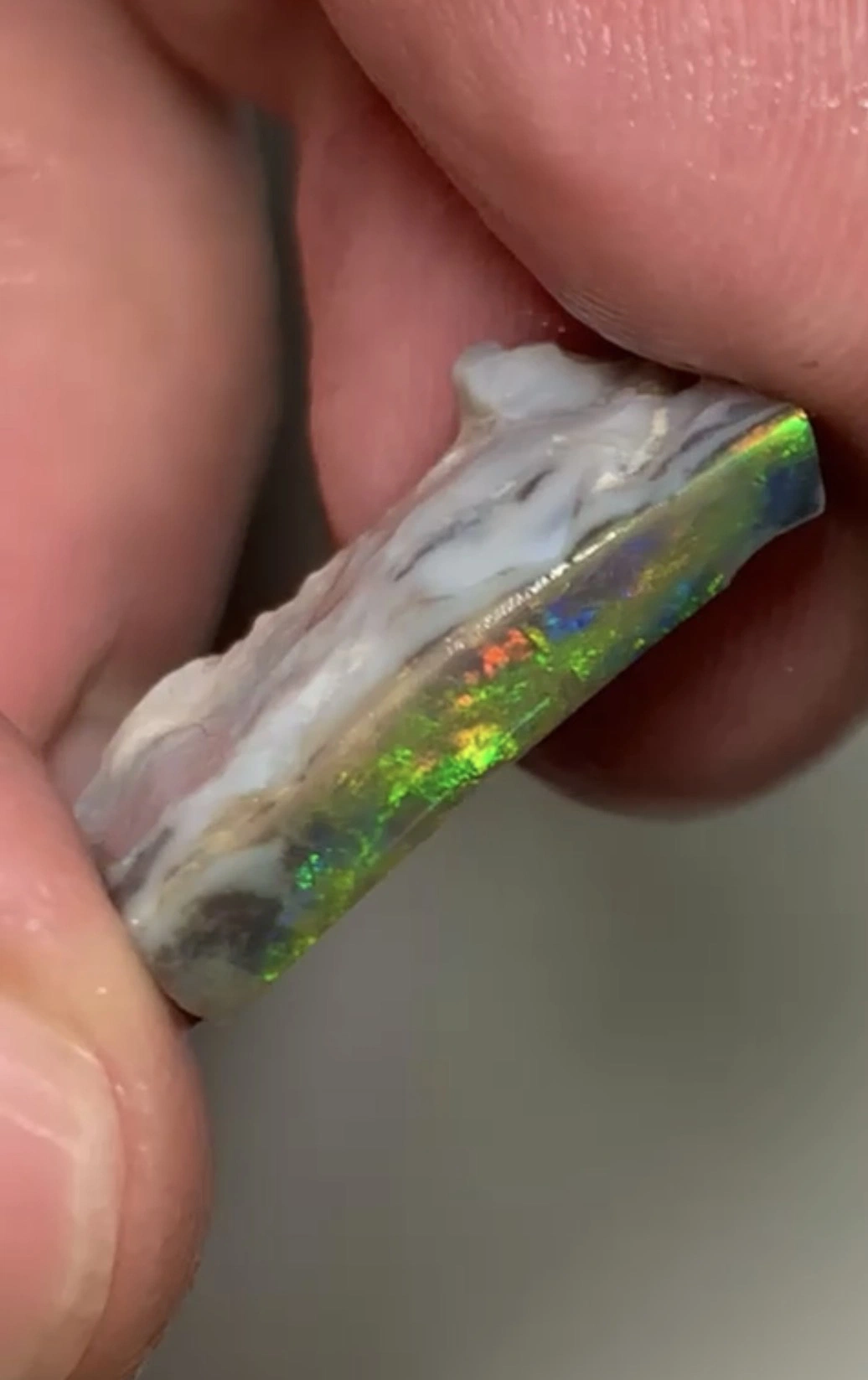
The English word seam means in particular « vein » or « layer ». A seam opal appears when the opal fills a crack or a more elongated space in the rock. It then has a shape often more flat than a nobby.
The color can follow a relatively regular line. It is sometimes visible on the slice or on an already open face. This provision helps to identify the possible orientation of the future stone. However, the thickness of the coloured area can vary a lot over the same room.
A seam opal does not necessarily produce an opal that is easier to cut. A very fine bar can disappear quickly during grinding. In addition, cracks, potch or inclusions can interrupt the color. The lapidary must therefore proceed with caution.
Why do we find these two forms at Lightning Ridge ?
Lightning Ridge is located in New South Wales, in an area known for its Black Opals. It appears in the form of nobbies and seams. The sedimentary rocks contain various voids, cracks and cavities in which silica may have been deposited.
The geometry of these spaces contributes to the final shape of the opal. An isolated cavity favours a nodular form. Instead, a crack or elongated space produces a vein. Some sectors are better known for their nobbies, while others mainly deliver seams.
The precise mechanism for the formation of Australian opal remains complex. Several explanations still exist. It is therefore preferable to avoid too categorical a presentation. To Lightning Ridge,Black Opal However, these two main forms are present.
Nobby opal or seam opal: how to recognize them?
A totally raw stone is not always easy to identify on a simple photograph. However, there are several clues to distinguish a nobby from a seam.
Observe the general form
A nobby usually looks like a small one Nodule independent. Its contours are rounded or irregular. It can also keep a potch or rock envelope around the opal.
A seam opal often has a more flat or elongated structure. The doopal zone follows a line, vein or layer. Nevertheless, a broken or already worked piece may have lost its original shape.
Examine the color bar
On a seam, the color bar can follow a relatively legible direction. This appearance sometimes gives an initial indication of The orientation of the stone.
In a closed nobby, color often remains more difficult to predict. A small milled window can reveal it. However, this opening does not always show what is in the rest of the Nodule.
Check readiness
The sellers offer opals that are entirely raw, split, sawn or already rough. An open nobby can look like a flat room. Similarly, a recut may lose its vein appearance.
The full description of the lot should therefore be read. Terms rough, split, rub and preform do not indicate the same stage of preparation.
What differences during trimming and polishing?
The natural form of opal influences the first phase of work. However, each stone remains unique. Caution counts more than the nobby or seam label.
Working a nobby
With a closed nobby, the first goal is to find the best direction. The rock and the potch must be gradually removed, without reaching too quickly the coloured area. A small orientation error can reduce weight or change the final shape.
Sometimes the work is a good surprise. On the other hand, there is a significant amount of uncertainty. To begin with, a nobby that is already open or slightly rough allows you to better understand the color position.
Working a seam opal
On a seam, the lapidary seeks to follow the coloured layer. The orientation sometimes seems more obvious, especially when the bar appears on several sides. However, a thin layer requires a precise gesture.
Variations in thickness should also be monitored. One area can make a cabochon, while another becomes too thin after a few passages on the wheel. Thus, a visible seam is not necessarily a simple stone to polish.
Which form to choose to learn?
For a first project, the state of preparation often counts more than the geological form. An open, stable and photographed room offers more markers than a fully closed crude.
An opal rub can therefore be more reassuring to learn polishing. The general form is already defined and part of the potch has been removed. This does not remove all risks, but the work becomes more readable.
Does a nobby have more value than a seam opal?
A nobby is not automatically more rare, more beautiful or more expensive than a seam. Similarly, a seam is not necessarily a lower choice. These words describe a natural form, not a quality category.
The value depends mainly on what the stone can produce after the cut. The Brightness, play of colour, Pattern, background, stability and final weight are decisive. The amount of potch and possible cracks also influence the yield.
For a Rough Opal, the price is therefore based on potential. The more visible the colour and the more legible the structure appears, the more the seller can estimate this potential. In spite of this, no photographs can fully guarantee the result obtained after polishing.
In order to deepen this topic, discover also the main criteria which determine the prices Rough Opals.
How to choose a Rough Opal Before the purchase?
Before buying a nobby or seam opal, it is useful to ask for images taken from several angles. A short video also helps to observe the movement of colors.
We must check the weight, dimensions and origin announced. The surfaces already ground must be clearly visible. It is also important to look for cracks, sandy areas and parts composed solely of potch.
A wet photo often makes colors more visible. However, it does not show exactly the appearance of dry stone. Ideally, the seller must present both states and specify the lighting conditions.
Finally, a very high price is not a guarantee. To learn, an affordable and readable piece is often a better choice than a closed nobby sold only on the promise of a hidden color.
Nobby, seam and opal rub: do not confuse terms
Words nobby and seam describe the natural form in which the opal developed. The word rub, on the contrary, means an opal already worked. Part of the rock and potch was removed to prepare the future stone.
Thus, an opal rub can come from a nobby or a seam. The rub is not a third geological formation. It corresponds to a step between the Rough Opal And the cabochon finished.
This distinction avoids frequent confusion when buying. It also makes it possible to better compare the lots offered by miners, stone-students and specialized sellers.
My experience with opals
I've been interested in opals for over twenty years. Over time, I have acquired and observed stones from several parts of Australia, including Lightning Ridge, Coober Pedy, Mintabie, Yowah and Koroit. This diversity has learned to never judge a Rough Opal Only on its shape or on a small visible coloured area.
A well rounded nobby can contain a lot of potch and very little color. Conversely, a modest seam may reveal a fine but luminous bar. All situations remain possible. This is precisely what makes the study of Rough Opals So exciting.
When I present an opal of my stock, I indicate its announced origin, weight and dimensions. I also observe possible cracks, already open faces and how colors move under the light. My goal is to describe each stone accurately, without exaggerating its potential or promising the result that could be achieved after the roughing.
The terms nobby, seam, split or rub are useful for understanding a stone. However, they are never sufficient to determine its quality or value. Only the full examination of the opal can estimate its potential and the risks associated with the degreasing.
Frequently asked questions about nobbies and seam opals
Does an opal nobby still contain l Precious Opal ?
No. A nobby may contain Precious Opal, but also potch, rock or areas without play of colour. Its external appearance does not guarantee its content.
Is a seam opal still flat?
It is usually more flat or elongated than a nobby, as it follows a crack or a layer. However, its shape may be irregular. A sawn or broken piece can also lose its original appearance.
Is a nobby still a Black Opal ?
No. The word nobby describes a geological form and not the background colour of the opal. The stone obtained can have different tones depending on its structure and the material discovered after opening.
Can we get an opal rub from a seam?
Yes. A rub is a rough opal and prepared for size. It can come from both a nobby and a seam opal.
Nobby opal or seam opal: which one to choose to start?
A room already open and stable generally remains easier to understand. To begin with, it is best to choose an opal whose colour, thickness and possible cracks are visible, regardless of its original shape.
Is seam opal cheaper than nobby opal?
Not necessarily. The price depends on the potential of the stone, the visibility of the colours, its weight, its stability and the expected yield after the size. The natural form is not enough to set its value.
Conclusion
The difference between an opal nobby and a seam opal comes above all from their natural form. The nobby develops in Nodule, while the seam follows a vein or layer in the rock. This distinction influences the appearance of the crude and the way in which it approaches during the roughing.
However, neither form is systematically better. Quality depends on colour, structure, stability and possible yield. For a first polishing project, an opal already open or rougher often offers more reassuring markers.
Understanding these terms therefore makes it possible to buy with more caution. It also helps to choose a stone adapted to his experience and project.


